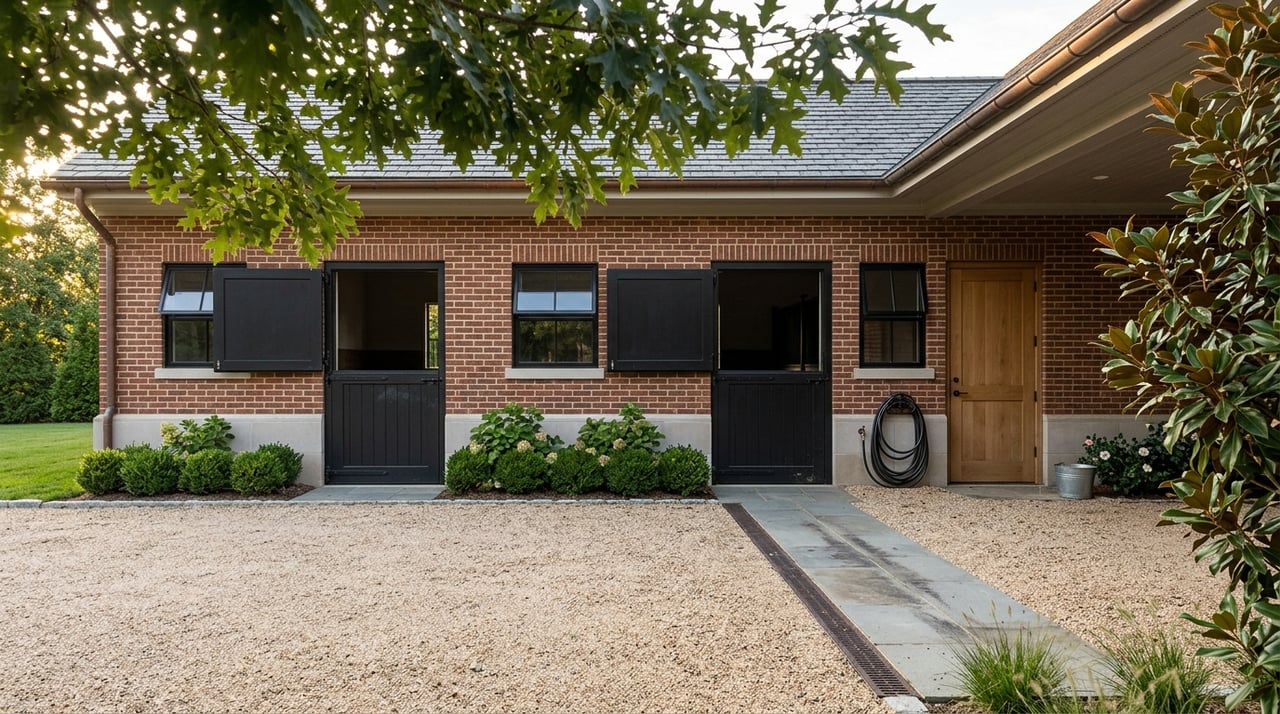
If you are looking for space, privacy, and a lifestyle that feels more grounded in land than in density, Milton deserves a close look. For many buyers, the appeal is not just a beautiful home. It is the chance to live in a place where large lots, horse properties, and rural character are part of the city’s identity. This guide will help you understand what Milton’s estate and equestrian lifestyle really looks like, what makes it different from nearby areas, and what to think through before you make a move. Let’s dive in.
What makes Milton different
Milton is a city in north Fulton County that formed in 2006 from unincorporated Fulton County. The city describes itself as rural but not remote, and that phrase captures a big part of its appeal. You get a setting shaped by open land and lower-density living while still staying connected to nearby north metro destinations.
Milton is also physically large for its population. Census QuickFacts reports an estimated population of 41,266 in July 2025 across 38.49 square miles of land, with a population density of 1,072.8 people per square mile. That lower-density pattern helps explain why the area feels more open than many nearby suburban markets.
The city’s planning and public materials strongly support that rural identity. Milton says about 85% of its more than 39 square miles are agriculturally zoned, and residential lots in those areas must be at least 1 acre. The city also says more than 90% of its land is low or very low density residential, with denser commercial activity concentrated around Crabapple and Deerfield/Highway 9.
How estate living takes shape
In Milton, estate living is tied closely to land. The city’s comprehensive planning includes an Agriculture, Equestrian, Estate Residential category that describes scattered single-family homes on at least one acre and typically several acres. That same framework promotes hobby farms, equestrian facilities, and large-lot estates, including minimum 3-acre lots on gravel roads.
That means the estate market here is not just about bigger houses. It is also about how the land can be used and how the property fits into Milton’s broader rural vision. In practical terms, buyers often look at acreage, access, buffers, and outbuildings just as closely as square footage and finishes.
Milton’s current large-lot incentives page reinforces that point. The city uses 3 acres as the threshold for a large lot and discusses measures such as covered riding arenas on properties of 10 or more acres, rebuilding barns and run-in sheds, additional driveway access options, and vegetative buffers. Those details show how strongly the local lifestyle is organized around land-intensive residential use.
Why equestrian life is real here
Some communities use equestrian language as branding. Milton treats it as a real part of city planning and community life. The Milton Equestrian Committee is dedicated to promoting and protecting the interests of equestrian enthusiasts and farm owners, and the city says horse farms are woven into the fabric of the community.
That distinction matters if you are searching for a property with true horse potential. In Milton, equestrian living is not limited to one isolated pocket. The city notes that horse farms are dispersed widely rather than clustered in just one location, which means the lifestyle is part of the broader landscape.
The city’s public works standards also contemplate separated walk, bike, and equestrian facilities where called for by planning documents or the Public Works Director. That is another sign that horseback riding is treated as part of local recreation and connectivity, not as an afterthought.
What kind of property you may find
If you are exploring Milton for estate or equestrian living, land size is one of the first things to understand. Official city materials center on 1-acre minimums in many areas, while 3 acres is the city’s threshold for a large lot. Depending on the property, you may also see homes on several acres that support a more private or more use-flexible setup.
This can create a very different search process from one you might have in a typical subdivision market. Instead of comparing similar homes on small lots, you may be weighing factors such as pasture space, driveway layout, barn potential, existing sheds, trail access, or how a property’s topography affects future use.
It also means no two properties feel exactly alike. Even homes with similar price points can offer very different value depending on the acreage, site layout, and infrastructure already in place.
How Milton supports an outdoor lifestyle
Milton’s appeal goes beyond private lots. The city has spent years planning for trails, open space, and conservation that support its rural identity. According to the city, Milton adopted a Trail Plan in 2007, a Trails Blueprint in 2017, and a Community Trail Prioritization Plan in 2020.
Residents can already walk trails in Bell Memorial Park, Birmingham Park, and Providence Park. Milton also says the Trails Advisory Committee was revived in 2022 as recommended in the city’s 2040 Comprehensive Plan. That ongoing planning effort suggests the trail network is part of the city’s long-term vision, not a short-term project.
The parks and greenspace picture is also notable. Milton City Park and Preserve includes 130 acres of passive preserve and 7 acres of active property, and the city plans a new active park on more than 24 acres along Deerfield Parkway. The city’s Greenprint program began after voters approved $25 million in bonds in 2016 to acquire land for trail areas, conservation land, wildlife habitat, and other natural areas.
How Milton compares with nearby cities
If you are deciding between Milton and another north Fulton location, the biggest difference often comes down to land. Milton’s planning language, agricultural zoning, and large-lot policies all point toward a more land-intensive housing pattern than you typically see in nearby suburban cities.
Home values reflect that distinction. Census QuickFacts lists the median owner-occupied home value at $789,000 in Milton, compared with $649,000 in Alpharetta, $629,400 in Johns Creek, and $567,100 in Roswell. While those figures do not prove lot size on their own, they are consistent with Milton’s limited supply of smaller lots and its estate-oriented profile.
The tradeoff is straightforward. Milton can offer more privacy, more separation, and more room for rural-style living, but it can also mean more upkeep and a more car-oriented routine. For some buyers, that is exactly the point. For others, it is something to weigh carefully before they choose the area.
Who Milton tends to suit best
Milton often fits buyers who want more than a house. It tends to appeal to people who value acreage, quieter streets, privacy, and the possibility of keeping horses or supporting hobby-farm uses on their property. That profile is based on the city’s land-use framework, equestrian programming, and long-term rural preservation goals.
It can also be a strong match if you are relocating and trying to balance access to north metro Atlanta with a less crowded day-to-day setting. Milton borders Cherokee County, Forsyth County, Roswell, and Alpharetta, so you are not cut off from nearby job centers, shopping districts, or established suburban services.
At the same time, this is not the best fit for every buyer. If you want a compact neighborhood pattern, easier walkability to retail, or less exterior maintenance, another market may suit you better. The key is knowing your priorities before you start touring homes.
What buyers should think about early
When you are shopping for estate or equestrian property in Milton, it helps to define your must-haves early. A beautiful home may not be the right fit if the land does not support the way you want to live. That is why strategy matters in this market.
A few questions can help guide your search:
- How much land do you actually want to maintain?
- Do you want existing equestrian infrastructure, or are you open to adding it later?
- Is privacy your top goal, or do you want quicker access to Crabapple or Deerfield/Highway 9?
- Are trails, open space, or rural views important parts of your day-to-day lifestyle?
- Do you want a property that feels turnkey, or one with long-term improvement potential?
These questions may sound simple, but they can shape everything from your search area to your budget to the kind of property that will feel right over time.
Why local guidance matters in Milton
Milton is not a one-size-fits-all market. Two homes with similar list prices can offer very different lifestyles depending on lot size, setting, infrastructure, and location within the city. That is why buyers often benefit from a calm, detailed approach instead of a rushed one.
If you are moving from a denser part of Atlanta or from out of state, the differences can be even more important. You may need help understanding how Milton’s large-lot environment compares with Alpharetta, Roswell, or other nearby options. You may also want a clear read on the tradeoffs between privacy, convenience, maintenance, and long-term resale appeal.
With the right guidance, those decisions become easier to sort through. You can focus on the lifestyle you want, the property features that matter most, and the parts of Milton that align with your goals.
If you are considering a move to Milton and want thoughtful guidance on estate homes, large-lot properties, or the area’s equestrian lifestyle, Brennan Ballard can help you navigate the options with clear advice and a personalized approach.
FAQs
What is estate living like in Milton, Georgia?
- Estate living in Milton usually means larger lots, lower-density surroundings, and homes that may sit on one acre or several acres, with the city’s planning framework strongly tied to rural preservation.
Are horse properties common in Milton, Georgia?
- Yes. Milton has a formal Equestrian Committee, and the city says horse farms are woven into the community and dispersed widely throughout the city.
How much land is typical for homes in Milton, Georgia?
- City materials center on 1-acre minimums in many areas, and Milton uses 3 acres as the threshold for a large lot.
Where is commercial development concentrated in Milton, Georgia?
- The city says denser commercial activity is more concentrated around Crabapple and Deerfield/Highway 9, while much of Milton remains low or very low density residential.
Is Milton, Georgia trying to preserve its rural character?
- Yes. The city’s vision and planning materials consistently emphasize preserving rural heritage, encouraging low-density residential patterns, and protecting the character that defines Milton.
How does Milton differ from Alpharetta or Roswell for buyers?
- Milton generally offers a more land-intensive, lower-density setting with more privacy and rural character, while the tradeoff can include more maintenance and a more car-oriented daily routine.