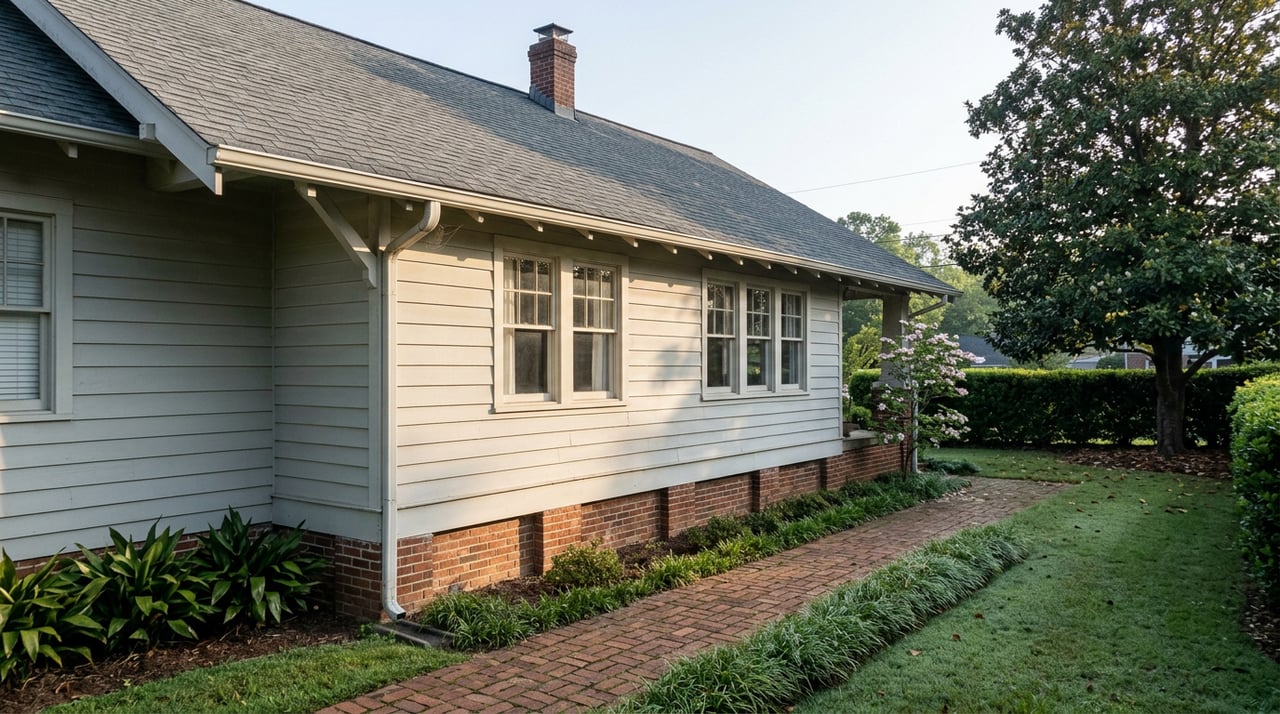
A homeowner on one of Virginia-Highland's bungalow streets calls a contractor about a rotting porch rail. The contractor mentions, almost in passing, that the city will need to sign off before anything gets replaced. The homeowner assumes this is universal, because the neighborhood is historic, because everyone says so, because the tour brochures and the plaques and the National Register listing all point the same direction. So they wait. They call the city. And they learn their specific block sits outside the one overlay that actually has enforcement power over exterior changes.
Their neighbor two streets over, inside Atkins Park, gets a different answer entirely.
This is the piece of Virginia-Highland's real estate mechanics that trips up sellers who are planning repairs before a listing, and buyers who assume a house's age comes with a single, predictable layer of red tape. It doesn't. Three separate things carry the word "historic" here, and only one of them has the legal authority to slow down your renovation.
Three Layers, One Label
Virginia-Highland developed as a streetcar suburb roughly between 1899 and 1955, with the bulk of its Craftsman bungalows going up in the 1910s and 1930s along the old Nine Mile Circle trolley line. The whole neighborhood carries a National Register of Historic Places listing for that history. What it does not carry, by itself, is any permitting authority. National Register status is honorary. It recognizes the architecture. It doesn't require anyone to file paperwork before replacing a window.
The actual regulatory teeth sit somewhere else, and only in certain pockets.
| Layer | What it is | What it actually requires |
|---|---|---|
| National Register listing | Honorary federal recognition | Nothing on its own, no local permits or approvals |
| Local historic overlay (portions including Atkins Park) | City of Atlanta district with Urban Design Commission oversight | A Certificate of Appropriateness for exterior changes visible from the street |
| Virginia-Highland Civic Association review | Private neighborhood planning committee process | Sign-off on new construction and major renovation projects, independent of city district status |
The overlay is the one people conflate with the whole neighborhood, and it isn't. It covers specific sections, Atkins Park among them. If your address falls inside it, a roof replacement using different materials, a window swap to a different style, an addition visible from the public right of way, a siding change, or a new front or side fence all trigger a Certificate of Appropriateness from the city's Urban Design Commission before a building permit can be issued. Administrative reviews for straightforward cases often take a matter of weeks. Anything that needs a public hearing in front of the full commission can stretch into months.
If your address falls outside the overlay, none of that applies to you, no matter how old the house is or what the National Register plaque says.
What Doesn't Need Sign-Off, Even Inside the Overlay
Sellers who assume the worst sometimes delay repairs that never needed a review in the first place. Inside the local overlay, the following typically move forward without a Certificate of Appropriateness:
- Interior renovations of any scope
- Mechanical system upgrades, including HVAC, plumbing, and electrical work
- Like-for-like repairs using matching materials
- Routine maintenance
- Rear additions not visible from the street
- Most landscaping, with some exceptions around tree removal
The City of Atlanta also carries a citywide threshold that matters for budgeting: repair work valued under $2,500 doesn't require a Certificate of Appropriateness or a building permit at all, even on historic-chapter properties. A porch rail replacement or a section of trim work can often clear that bar entirely.
The Layer That Actually Applies Neighborhood-Wide
Here's the part that surprises even sellers who've done their homework on city zoning. The Virginia-Highland Civic Association runs its own planning committee review, and it applies to home projects across the neighborhood, not just inside the formal city overlay. Restoration projects and new construction alike typically go through this process before ground gets broken, with guidelines covering fencing, landscaping, driveways, and other street-facing elements.
So the practical sequence for a seller thinking about exterior work before listing looks less like "check if I'm historic" and more like "check three separate things: is my address inside the Atkins Park overlay, does my scope of work clear the $2,500 threshold, and has the civic association's planning committee seen this project." Skipping the third question because the city cleared you on the first two is how a repair timeline slips past a listing date.
What Buyers Actually Find in These Houses
None of this replaces the ordinary due diligence that comes with a pre-war bungalow, and it shouldn't be confused with it. Homes built in this era share a predictable set of aging systems, and buyers who work this market regularly know to expect them rather than treat them as red flags:
- Brick or stone pier foundations that settle unevenly over time, with releveling or pier replacement running roughly $5,000 to $15,000
- Original galvanized steel supply lines that corrode from the inside, with a full switch to PEX or copper running $8,000 to $20,000 depending on access
- Knob-and-tube wiring where it remains, which typically means a full removal and panel upgrade in the $10,000 to $25,000 range
- A comprehensive gut renovation running $100 to $200 per square foot, which puts a full-scope project on a 1,500-square-foot bungalow somewhere between $150,000 and $300,000
None of this is a reason to avoid these houses. It's a reason to price the work accurately and hire inspectors who've seen this housing stock before.
The Sewer Line Nobody Budgets For Until It's a Problem
The one system a standard walkthrough can't evaluate is the sewer lateral, and it's worth the extra step here specifically because of what's growing above it. Many of these laterals are original clay or cast iron, running under mature tree canopy that has had plenty of time to find its way into old joints. A camera scope during the due diligence period is inexpensive relative to what a collapsed section costs to excavate and replace, and it turns an unknown into a negotiating point instead of a post-closing surprise.
Insurance Catches What Negotiations Sometimes Miss
Age-typical systems don't just show up in a home inspection report. They show up in an insurance underwriting file. Carriers routinely scrutinize roof age, electrical panel condition, and any evidence of retired wiring types before binding a standard replacement-cost policy, and some require a four-point inspection covering roof, electrical, plumbing, and HVAC before they'll issue coverage at all. A house with active knob-and-tube wiring may only qualify for an HO-8 policy, which pays actual cash value rather than full replacement cost on certain items. Confirming insurability, and the conditions attached to it, is worth doing well before closing rather than during it.
Why the Timing Still Favors Sellers Who Plan Ahead
Here's where the permitting question and the market question meet. Several market trackers following Virginia-Highland through 2026 have shown homes here selling consistently faster than the broader Atlanta metro average, even as the exact pace shifts from month to month and source to source. Sale prices in the neighborhood remain among the highest of any walkable intown Atlanta pocket. That combination raises the stakes on getting the sequencing right.
A seller who assumes their exterior repair needs city approval when it doesn't may delay a listing by weeks for no reason. A seller inside Atkins Park who assumes the opposite may find their contractor can't legally start work until a Certificate of Appropriateness clears. Either mistake collides with a market that's moving faster than any of these approval processes. The houses that hit the market ready to show, with permitting questions already answered, are the ones that capture that speed instead of losing it to a preventable delay.
A Few Questions Worth Settling Early
Does my house being on the National Register mean I need city approval to replace my roof? No. National Register status is honorary recognition of the neighborhood's history. It doesn't carry local permitting authority on its own. The only city-enforced review comes from the local historic overlay, which covers specific sections of the neighborhood, not the whole area.
How do I find out if my address is inside the overlay? The City of Atlanta's Historic Preservation Studio, part of the Office of Design, can confirm whether a specific address falls inside a designated historic district and what scope of work would trigger a review. Confirming this before signing a contractor agreement, not after, keeps a repair timeline predictable.
Does the civic association review cost money? It's primarily a matter of time and design conditions rather than fees. Getting a project in front of the planning committee early, before a contract is signed with a contractor, tends to keep it from becoming a scheduling problem later.
If you're weighing a bungalow renovation ahead of a listing, or trying to figure out what a specific address can and can't do without a public hearing, Brennan Ballard has spent enough time in Virginia-Highland's older housing stock to help you sequence the repairs, the reviews, and the timeline correctly the first time. Let's Connect.